

Get your lung screening at Life Imaging today!
We save lives by detecting lung cancer, COPD, and more in 15 minutes or less
Request your next-day lung screening below
Congratulations!
You have taken an important first step towards optimizing your health with Life Imaging!
A scheduling agent will call you shortly from our office at (954) 834-6362 to confirm your appointment. To streamline this process and reserve your scan, please answer this potentially life-saving phone call.
If you have any urgent questions, we're available Monday through Saturday, 8:00 AM to 4:00 PM.
Get your lung screening at Life Imaging today!
We save lives by detecting lung cancer, COPD, and more in 15 minutes or less
Congratulations!
You have taken an important first step towards optimizing your health with Life Imaging!
A scheduling agent will call you shortly from our office at (954) 834-6362 to confirm your appointment. To streamline this process and reserve your scan, please answer this potentially life-saving phone call.
If you have any urgent questions, we're available Monday through Saturday, 8:00 AM to 4:00 PM.
OUR LOW-DOSE CT SCANNING HAS BEEN FEATURED IN










More than 6% of adults are diagnosed with chronic obstructive pulmonary disease (COPD).
We can identify lung problems as small as 1mm

At Life Imaging, our skilled radiology specialists are trained to identify chronic obstructive pulmonary disease (COPD) as well as lung cancer or bronchus cancers.
Life Imaging’s CT scanning technology is 11-times more sensitive than traditional chest X-rays, allowing us to safely detect early-stage lung diseases when they’re most curable. Survival rates for lung cancer are much higher when caught early.
We save lives by offering comprehensive lung screening using innovative, low-dose GE CT scanning technology.
Accuracy
Our painless, low-dose CT scans can detect signs of coronary artery disease with 98% accuracy.
Detection Rate
Nearly 1 in 5 fast, non-invasive scans at Life Imaging result in potentially life-saving findings.
Diseases Detected
We detect over 100 diseases and forms of cancer, in some cases, a decade before symptoms occur.
Take charge of chronic disease detection in 3 easy steps.
In the U.S., the current healthcare system is reactive, focusing on treating illnesses after they occur rather than proactive prevention. You have a right to a deeper understanding of your body’s health, before any symptoms arise.
Here’s how Life Imaging works:
1. Schedule Your Scan
Submit the form to book a free heart scan at your closest Life Imaging location.

2. Come in for Your Scan
You will stay fully dressed for the 5-10 minute scan. It’s fast, non- invasive and safe.
3. Review Your Results
Review your family history with a patient advocate. You will receive a copy of your results.

Common Questions Section
What is lung screening?
Lung screening at Life Imaging uses cutting-edge, low-dose GE CT scanning technology to screen for lung cancer and other lung diseases that negatively affect health and well-being. Early disease detection offers the best chance of effective, long-lasting health outcomes for men and women — along with peace of mind through preventive care.
Which conditions can lung screening detect?
Lung screening with low-dose GE CT scanning technology can detect the following lung conditions and more:
- Chronic obstructive pulmonary disease (COPD)
- Emphysema
- Pneumonia and other infections
- Inflammatory lung conditions
- Lung cancer
- Fluid
- Scarring
- Tumors
- Lung nodules
- Enlarged lymph glands in the chest
- Asbestosis
- Sarcoidosis
- Tuberculosis
- Pleurisy
Is lung screening right for me?
Candidates for lung screening include those at risk of lung cancer or other lung-related disease. Examples of risk factors include smoking, breathing in toxic fumes, pollution, and a family or personal history of lung diseases. Symptoms of lung problems include coughing up blood or mucus, chronic coughing, shortness of breath, wheezing, and chest tightness or pain.
What are the benefits of low-dose GE CT lung screening?
The benefits of choosing GE CT scanning to screen for lung diseases include:
- No needles, contrasts, or dyes
- Fast, comfortable experience
- Lower doses of radiation
- High accuracy rates
- No sedation
- FDA approval
- No pain, invasive procedures, or downtime
- Quick results
The experts at Life Imaging are highly skilled in CT imaging that screens for lung diseases and other conditions involving organs of the chest, abdomen, and pelvis.
What happens during lung screening?
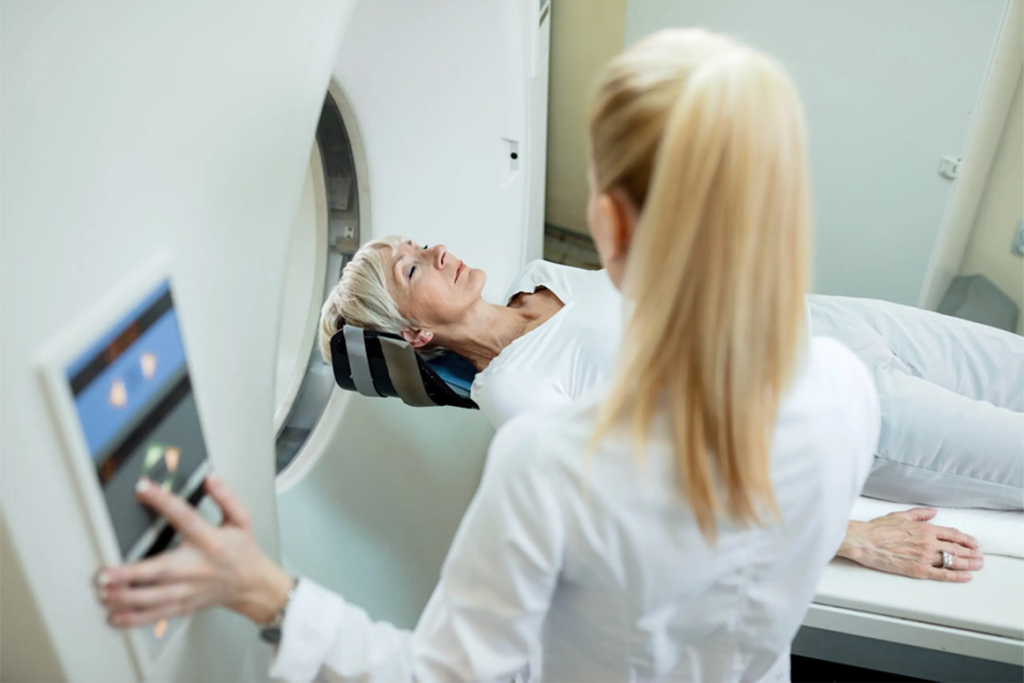
Before lung screening using low-dose GE CT scanning, you change into a hospital gown and lie down on a comfortable table. While you relax and stay still, the table glides into a CT scanning machine to create internal body images. You might need to hold your breath at certain times throughout screening, which often lasts about 15 minutes.
Afterward, your radiologist interprets the results and offers specialist referrals as needed if they detect signs of lung cancer or other chronic lung conditions.
Schedule lung screening at Life Imaging by calling the office or using the online booking feature today.
Hear our life-saving stories.
Life Imaging saved my life
‘In January, I went for a free CT scan and I had two stents put in my heart. The cardiologist said that within 6-9 months I would have had a stroke, died, or had a silent heart attack. Life Imaging saved my life’
A Free Scan is a No-Brainer
‘The conventional approach to medicine has it all backwards. They wait to diagnose and manage a disease after it’s developed. Life Imaging offers you an opportunity to look directly inside the body.’
They Found a Cancerous Tumor
‘I went for a scan because my mom had died of a heart attack at the end of May. I’m in perfect health, no symptoms of anything, 58 years old, non-smoker, healthy, no medication. Well, they found a cancerous tumor in my left-upper lobe of my lung. I’m told that I caught it so early that I’m going to be totally fine. Everyone is saying, including the doctor, that getting the scan saved my life.’
Lung Screening FAQs
Life Imaging’s preventive lung screening is an imaging exam designed to evaluate the lungs for early findings that may require follow-up, often before symptoms appear. The purpose is early awareness and risk-informed decision-making. You receive a written report that can be shared with your physician to decide whether additional evaluation, monitoring, or follow-up imaging is appropriate.
Lung screening may be appropriate for people with elevated risk, including those with a smoking history or meaningful exposure to secondhand smoke. Some people also choose screening to establish a baseline when prevention is a priority. The right choice depends on your age, risk factors, and medical history, so physician guidance is useful when deciding whether screening fits your profile.
A lung screening scan can identify findings that may require further evaluation, including lung nodules or other abnormalities. Screening does not confirm cancer by itself. If something is seen, the next step is usually follow-up imaging at an appropriate interval or a clinical evaluation to clarify what the finding represents and whether additional testing is needed.
Screening is intended for people who are not experiencing urgent symptoms. If you have persistent cough, coughing up blood, unexplained weight loss, chest pain, or sudden shortness of breath, seek medical evaluation promptly. In those situations, a physician-guided diagnostic workup is typically the right pathway rather than preventive screening.
A lung screening appointment is usually straightforward: check-in, confirmation of basic health details, and a short scan while you lie still as images are captured. You may be asked to hold your breath briefly so the images are clear. Most patients return to normal activities immediately afterward because lung screening is designed to be efficient and non-disruptive.
Preparation is usually minimal, but you should follow scheduling instructions. If you have prior chest imaging, lung conditions, or a history of procedures, keep that information available so results can be interpreted in context. If you’re currently under pulmonary care, share your results with your physician to align next steps with your treatment plan.
Lung nodules are common and many are benign. If a nodule is noted, the next step is typically physician review of the report and a recommendation for follow-up imaging at a specific interval based on the characteristics described. The value of screening is having clear documentation that guides a sensible monitoring plan instead of guesswork.
Screening intervals depend on your risk profile and any findings on prior scans. Your physician is best positioned to recommend timing based on your history and the report’s guidance. The most important factor is consistency and completing follow-up when recommended, because monitoring over time is often what provides the clearest clinical insight.