

Get a Virtual Colonoscopy at Life Imaging today!
We can detect colon polyps and cancer up to 10 years before the first symptoms
Congratulations!
You have taken an important first step towards optimizing your health with Life Imaging!
A scheduling agent will call you shortly from our office at (954) 834-6362 to confirm your appointment. To streamline this process and reserve your scan, please answer this potentially life-saving phone call.
If you have any urgent questions, we're available Monday through Saturday, 8:00 AM to 4:00 PM.
OUR LOW-DOSE CT SCANNING HAS BEEN FEATURED IN










About 1 in 25 people are affected by colon cancer. The American Cancer Society recommends that adults begin colonoscopy screening at age 45
At Life Imaging, say goodbye to sedation and discomfort associated with traditional colonoscopies by choosing a virtual colonoscopy, also known as a CT colonography. Our highly-trained radiology specialists offer this service to detect early signs of cancer simply and effectively without endoscopic insertion, pain, downtime, or sedatives.
Traditional Colonoscopy
- 2-3 hours total, including sedation and recovery
- Requires sedation
- 5-6 feet of tubing
- Scans colon
Virtual Colonoscopy
- 15 minutes
- No sedation
- 2-3 inch probe
- Scans colon + abdomen
Get a Virtual Colonoscopy at Life Imaging today!
We can detect colon polyps and cancer up to 10 years before the first symptoms
Request your CT colonography below
Congratulations!
You have taken an important first step towards optimizing your health with Life Imaging!
A scheduling agent will call you shortly from our office at (954) 834-6362 to confirm your appointment. To streamline this process and reserve your scan, please answer this potentially life-saving phone call.
If you have any urgent questions, we're available Monday through Saturday, 8:00 AM to 4:00 PM.
Accuracy
Our painless, low-dose CT scans can detect signs of coronary artery disease with 98% accuracy.
Detection Rate
Nearly 1 in 5 fast, non-invasive scans at Life Imaging result in potentially life-saving findings.
Diseases Detected
We detect over 100 diseases and forms of cancer, in some cases, a decade before symptoms occur.
Take charge of chronic disease detection in 3 easy steps.
In the U.S., the current healthcare system is reactive, focusing on treating illnesses after they occur rather than proactive prevention. You have a right to a deeper understanding of your body’s health, before any symptoms arise.
Here’s how Life Imaging works:
1. Schedule Your Scan
Submit the form to book a free heart scan at your closest Life Imaging location.

2. Come in for Your Scan
You will stay fully dressed for the 5-10 minute scan. It’s fast, non- invasive and safe.
3. Review Your Results
Review your family history with a patient advocate. You will receive a copy of your results.

Common Questions
What is virtual colonography?
A virtual colonography (also called a virtual colonoscopy or CT colonography) is a diagnostic imaging procedure that uses low-dose GE CT scanning technology to screen for colon cancer and other problems in the digestive tract.
Virtual colonography procedures use painless, low-dose X-ray imaging to create pictures of the inside of your colon and rectum, achieving highly accurate results without pain or downtime.
What are the benefits of virtual colonography?
A virtual colonography at Life Imaging offers an array of benefits, including:
- Noninvasive
- Early cancer detection
- FDA approved
- Preventive screening
- Disease management
- No sedation
- No pain, risk, or downtime
- Utmost comfort
- Efficient Screening
Virtual colonography colon cancer screening is quick and painless. It’s a comfortable, highly effective alternative to traditional colonoscopies. You can avoid sedation, the need for someone to drive you to and from the procedure, and endoscope insertion when choosing this diagnostic procedure.
Who is a candidate for a virtual colonography?
If you’re due for a routine colonoscopy because of age or other colon cancer risk factors, chances are you can choose virtual colonography instead. Your provider might suggest you begin colon cancer screening at age 45 or as needed because of specific symptoms or risk factors.
You may not be a candidate for a virtual colonoscopy if you have a history of colon cancer, colon polyps, Crohn’s disease, acute diverticulitis, or ulcerative colitis. If you have polyps that require removal, you must undergo a traditional colonoscopy.
What should I expect during virtual colonography?
To prepare for a virtual colonography, follow your provider’s instructions. You must first empty your colon by avoiding food, drinking clear liquids, using a laxative, taking medications, or adjusting your usual medicines.
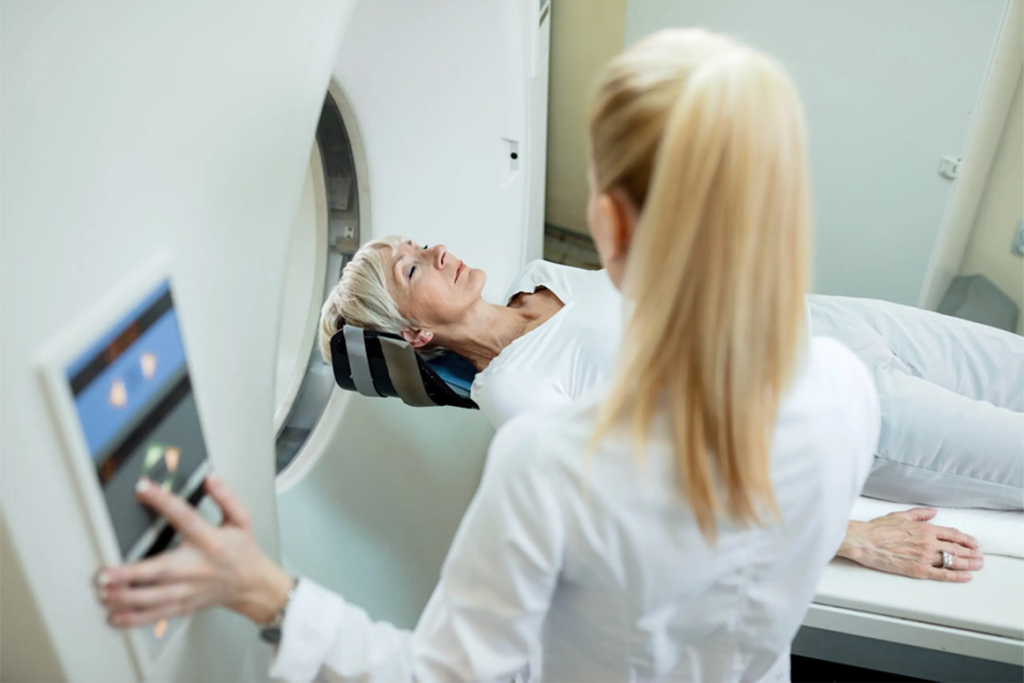
You change into a hospital gown and lie down on an exam table while your Life Imaging specialist uses a catheter to insert air into your colon. Your exam table slowly glides into a CT scanning machine, which scans your body for signs of medical problems. You might change positions while the CT machine completes additional scans.
You might need to hold your breath during certain times throughout the screening procedure.
A virtual colonography often lasts about 15 minutes vs. up to the 60 minutes required during traditional colonoscopies, not including sedation and recovery time, which can take up to three hours.
What happens after a virtual colonography?
Afterward, you might feel a bit bloated or gassy for a few hours as your body clears away gas from your colon. You can resume typical daily activities, including driving, immediately. Your Life Imaging specialist interprets the results and offers referrals to other specialists for further diagnostic testing or treatment if necessary.
Hear our life-saving stories.
Life Imaging saved my life
‘In January, I went for a free CT scan and I had two stents put in my heart. The cardiologist said that within 6-9 months I would have had a stroke, died, or had a silent heart attack. Life Imaging saved my life’
A Free Scan is a No-Brainer
‘The conventional approach to medicine has it all backwards. They wait to diagnose and manage a disease after it’s developed. Life Imaging offers you an opportunity to look directly inside the body.’
They Found a Cancerous Tumor
‘I went for a scan because my mom had died of a heart attack at the end of May. I’m in perfect health, no symptoms of anything, 58 years old, non-smoker, healthy, no medication. Well, they found a cancerous tumor in my left-upper lobe of my lung. I’m told that I caught it so early that I’m going to be totally fine. Everyone is saying, including the doctor, that getting the scan saved my life.’
Virtual Colonography FAQs
Life Imaging’s virtual colonography is a non-invasive CT-based colon screening that creates detailed images of the colon to check for polyps or other findings that may need follow-up. It is designed for screening purposes and is often chosen by people who want a colon evaluation without sedation. You receive a report that can be shared with your physician to decide what to do next.
Virtual colonography uses CT imaging to evaluate the colon, while a traditional colonoscopy uses a scope to directly view the colon and remove polyps during the same procedure. Virtual colonography can detect findings that need attention, but it typically does not remove polyps. If a polyp or suspicious area is identified, your physician may recommend a follow-up colonoscopy for removal or biopsy.
Virtual colonography is designed to be performed without sedation. Because sedation is not typically used, most patients return to normal activities soon after the exam. This is one reason some people prefer it as a screening option. Your clinic will provide appointment instructions so you know what to expect on the day of your scan.
Virtual colonography is used to detect polyps and other structural findings in the colon that may require medical follow-up. The scan can identify areas that look abnormal and should be evaluated further. If something is found, the next step is usually a physician review of the report and a decision about whether traditional colonoscopy or additional evaluation is needed.
Virtual colonography may be appropriate for people who are due for colon screening and want a non-invasive imaging option. The right test depends on your age, family history, prior screening results, and whether you have symptoms. If you have gastrointestinal symptoms, your physician may recommend a diagnostic pathway instead of a screening exam.
Preparation typically includes bowel prep steps so the colon is clear enough for accurate imaging. Following prep instructions closely is the most important factor for getting a usable result. If prep is incomplete, images can be harder to interpret and may lead to an unclear outcome. Confirm the exact prep timeline and instructions at scheduling so you know what to do and when.
If a polyp is identified, your physician will usually recommend a traditional colonoscopy to remove it or evaluate it further. Virtual colonography is designed to detect findings, not treat them during the imaging exam. The practical benefit is knowing whether a follow-up colonoscopy is necessary and having clear documentation to guide that decision.
The best screening option is the one that fits your risk profile and that you will complete with appropriate follow-up. Virtual colonography may appeal if you want a non-invasive, non-sedated screening approach. Colonoscopy may be preferred when there is a higher likelihood of needing immediate polyp removal. Your physician can help you choose based on your history and screening goals.